Guides
MiSTer vs RetroPie vs Original Hardware
Sep
The honest answer is that MiSTer, RetroPie and original hardware are good at different things. If you are deciding where to spend money, this comparison sets out the real trade-offs rather than the marketing version.
The fundamental difference
RetroPie runs emulators as software on a general-purpose computer — usually a Raspberry Pi. Original hardware is the real thing. MiSTer is neither: it recreates the original chips inside an FPGA, so the game runs on hardware that behaves like the console it is imitating.
That distinction drives everything else: accuracy, latency, cost, convenience and what you can actually do with the machine.
Accuracy and timing
MiSTer’s advantage is timing. Cores are written to reproduce the original hardware’s behaviour at the cycle level, including quirks that software emulation approximates or ignores. The practical result is that games feel and sound the way they did — including the parts that were technically bugs.
RetroPie has improved enormously and runs well on a Raspberry Pi 4 or 5, but it remains software emulation. For most games the difference is subtle; for some it is obvious.
Original hardware is by definition perfect — until capacitors age, disc drives fail or you cannot find a working cartridge.
Latency and input feel
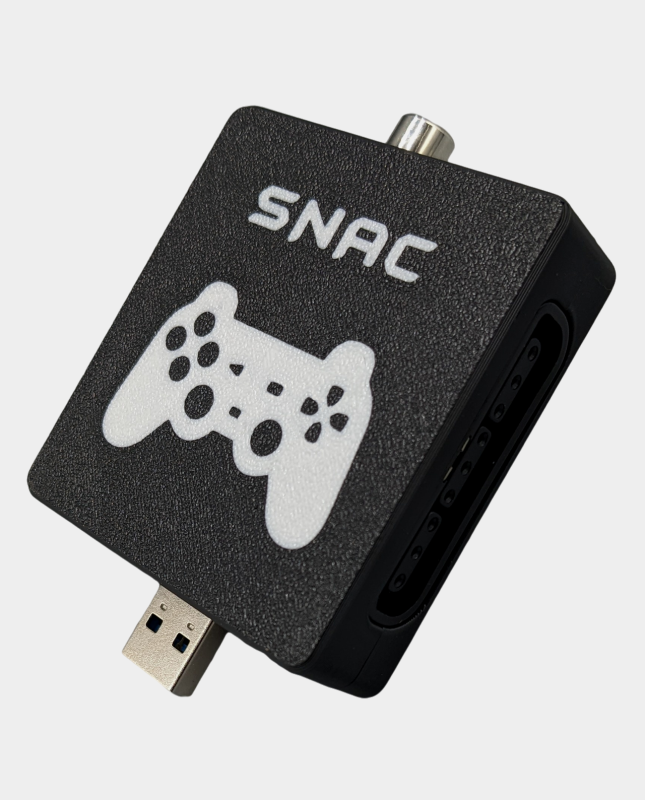
Latency is where MiSTer and original hardware lead. MiSTer can drive original controllers through SNAC, bypassing USB polling entirely, which matters in fighting games, shoot-em-ups and platformers that depend on frame-perfect input. Our SNAC vs BlisSTer vs USB comparison covers how much difference this makes in practice.
RetroPie latency depends on the emulator, the display and the input method. It is perfectly playable, but it is the least predictable of the three.
Cost
- RetroPie: cheapest. A Raspberry Pi, a case, a power supply and a controller is often under £100.
- MiSTer: mid-range. A board plus SDRAM, cooling and power lands somewhere between RetroPie and collecting original hardware. See our UK starter kit guide for a realistic parts list.
- Original hardware: least predictable. The console may be cheap, but the games, upscalers, cables and repairs add up quickly, and prices for desirable titles keep rising.
Convenience and maintenance
RetroPie wins on convenience in one specific sense: you can run many systems from one cheap box, and the ecosystem is huge. It also needs configuration, and emulator updates occasionally break things.
MiSTer needs almost no ongoing work once it is set up. Cores update in place, and there are no per-game emulator settings to fuss over. The initial build is the main effort — see our setup guide.
Original hardware needs the most maintenance: capacitors, belts, laser assemblies and the risk that a favourite console simply stops working.
Display options
All three can drive a modern display. MiSTer and original hardware can also drive a CRT properly, which is where retro games look the way they were designed to look. Analogue output on MiSTer requires an IO board — either the Analog IO Board or the IO Board A/V Pro.
Where each one wins
- Choose RetroPie if budget is the priority, you want maximum systems per pound, and you are happy to configure software.
- Choose MiSTer if you want hardware-accurate behaviour, low latency, no emulator configuration and a system that keeps working.
- Choose original hardware if you want the physical object, the cartridges and the collecting as much as the gaming.
Many people end up with more than one. RetroPie is a great second machine; original hardware is a great thing to own and a poor thing to depend on.
Frequently asked questions
Is MiSTer more accurate than RetroPie?
Yes, for the systems that have well-developed cores. MiSTer reproduces hardware timing; RetroPie approximates it in software.
Can MiSTer run everything RetroPie can?
No. MiSTer covers the systems that have cores. RetroPie covers a wider range, including systems MiSTer does not target.
Is MiSTer worth the extra cost over a Raspberry Pi?
If you care about timing accuracy, latency and original controller support, yes. If you want the broadest system coverage for the least money, no.
Does MiSTer replace original hardware?
For playing, largely yes — and it is more reliable than twenty-year-old consoles. For collecting and the physical experience, no.
Ready to compare parts? See our expansion boards, cooling and accessories ranges.
Related reading
Still deciding on part of your build? These guides cover the other choices MiSTer owners face most often.
- MiSTer FPGA starter kit UK — what a MiSTer build actually costs.
- The best MiSTer cores for beginners — what the platform does best.
- Connecting original controllers to MiSTer — the latency question in practice.
- The cheapest way to build a MiSTer in the UK — how to keep the budget down.
