Guides
Best MiSTer FPGA Cores for Beginners
Sep
The MiSTer core list is enormous, and the fastest way to enjoy the platform is to start with the systems that work perfectly and need no setup. These are the cores worth trying first, grouped by what they do well.
Why some cores are better starting points
A few cores run accurately with a plain USB controller, need no special memory configuration and boot straight into a game. Others need specific ROM sets, more SDRAM, a keyboard or analogue output. Start with the first group and the platform feels effortless; start with the second and it feels like a project.
Arcade: the showcase cores
Arcade is where MiSTer impresses people most. The FPGA reproduces original hardware behaviour, including the timing quirks that software emulation approximates.
- Classic 80s arcade boards. Simple, immediate, and they run on almost any configuration.
- CPS-1 and CPS-2. Capcom’s fighting game and beat-em-up catalogues, running with correct timing.
- Neo Geo. One of the most demanding cores and one of the most rewarding — but it needs a full 128MB SDRAM module and correct ROM sets. See the 32MB vs 128MB guide.
Arcade cores are playable with any USB controller, but they feel best with proper arcade sticks and buttons wired through a USB encoder. A modern console pad works fine to start with, and a USB hub and accessories setup lets you add whatever you prefer later.
Consoles: the most accessible group
Console cores are the easiest entry point. You plug in a controller, load a ROM and play.
- NES and SNES. Two of the most polished cores on the platform. Both work with any USB gamepad.
- Mega Drive and Master System. Extremely well developed, with accurate audio.
- Game Boy and Game Boy Advance. Game Boy Advance is more demanding and benefits from SDRAM.
- PlayStation. Works well but expects a memory card and CD image setup, so it is a second-week project rather than a first-evening one.
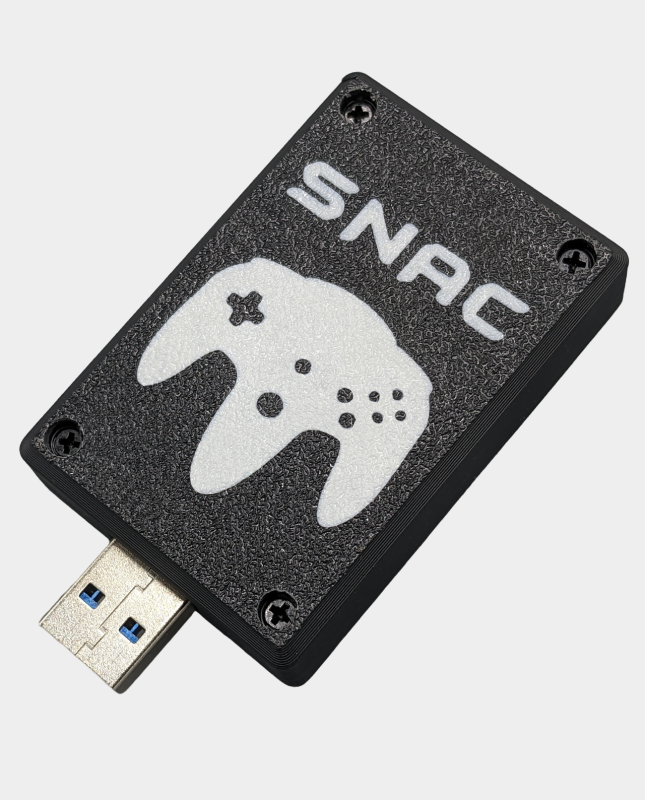
If you want original pads rather than USB, that is the SNAC route — our controller comparison explains it.
Computers: where the keyboard matters
MiSTer’s computer cores are a quiet strength, but they need a USB keyboard and often a mouse.
- Amiga. One of the best reasons to own a MiSTer. Needs a keyboard and disk images, and benefits from SDRAM.
- Commodore 64. Straightforward and satisfying, especially with an original joystick.
- ZX Spectrum and BBC Micro. Strong UK interest, well supported.
- DOS and PC-era cores. These pair beautifully with MT32-Pi for period-correct MIDI music.
Cores that need extra hardware
Some cores only reach their full potential with add-ons. It is worth knowing which before you judge them.
- Analogue output. Cores look their best on a CRT through an IO board with A/V output.
- Light guns. Need specific video timing and a compatible display.
- Original controllers. Need an IO board and a SNAC adapter.
- MIDI music. Needs an MT32-Pi HAT.
How to install and update cores
Use the update script inside the MiSTer menu. It fetches current cores and keeps them updated. If you have not set the board up yet, start with our step-by-step setup guide.
Frequently asked questions
How many cores are there?
Several hundred across arcade, consoles, computers and specialist hardware. New cores and improvements appear regularly.
Do I need 128MB SDRAM for the best cores?
For Neo Geo and the heavier arcade cores, yes. Most console cores do not need it.
Which core should I try first?
Pick a console or computer you have nostalgia for. SNES, Mega Drive and Game Boy are the most immediately satisfying.
Are cores accurate?
Many are cycle-accurate reproductions of original hardware, which is the entire point of the platform.
Get set up for more cores: browse SNAC adapters, expansion boards and accessories.
Related reading
Still deciding on part of your build? These guides cover the other choices MiSTer owners face most often.
- How to set up MiSTer FPGA — get the board running first.
- Connecting original controllers to MiSTer — for the cores that deserve a real pad.
- MT32-Pi guide: MIDI on MiSTer — the upgrade for DOS-era computer cores.
- DE10-Nano vs MiSTer Pi vs QMTECH — which board to run them on.
