MiSTer Addons
The MiSTer FPGA project lead developer Alexey Melnikov (Sorgelig) has designed and added a number of daughter boards, these provide additional functionality to the required base DE10-Nano board. A basic entry level MiSTer setup starts with just a bare DE10-Nano board. However with just one additional addon board the SDRAM module, you will be able to use the majority of available computer, console and arcade cores.
The most popular expansion addon boards are as follows, the MiSTer SDRAM board which is plugged into the JP1 (GPIO 0) connector of the DE10-Nano board. Providing a retro memory module for many cores.
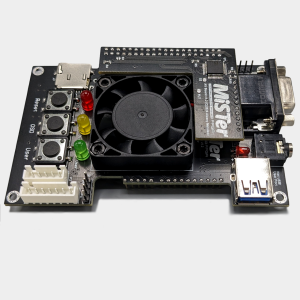
The MiSTer IO board is plugged into the JP7 (GPIO 1) connector of the DE10-Nano and provides a VGA output, 3.5mm audio jack with TOSLink, three buttons, three status LEDs, secondary micro SD card slot, fan header, user IO connector, two additional headers allowing integration of the MiSTer into cases.
The MiSTer Digital IO board leaves both DE10-Nano GPIO connectors free while still providing, a dedicated on off power switch, 3.5mm jack for tape input, digital TOSLINK connectors, a secondary microSD card slot, three status LEDs, three push buttons, expansion connector, external LED and button headers for integration into a MiSTer case.
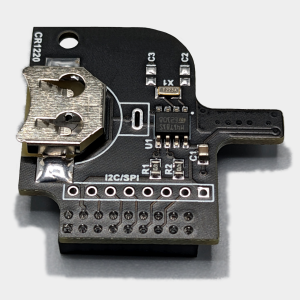
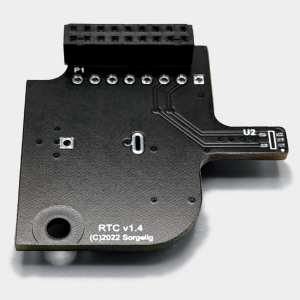
The Real Time Clock or MiSTer RTC board provides real time offline for certain MiSTer cores, the RTC board for the MiSTer is plugged into the Terasic DE10-Nano’s LTC connector.
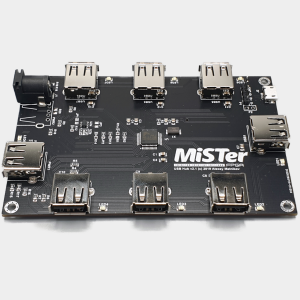
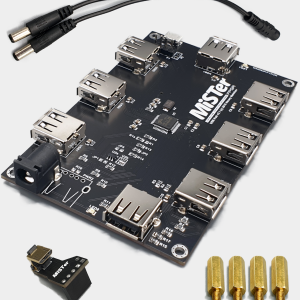
The MiSTer USB Hub Board is an expansion board allowing for convenient USB device connections, this add-on board provides a 7 port USB hub which sits neatly under the DE10-Nano main board.
Expansion Boards
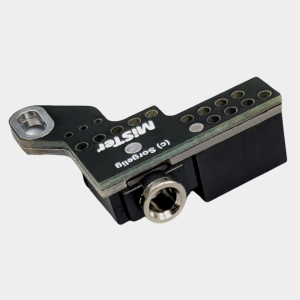
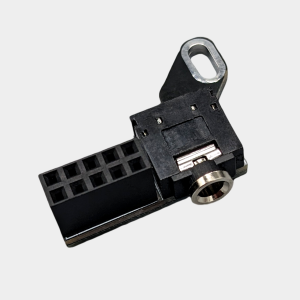
Audio tape input board for MiSTer with a 3.5mm headphone jack that plugs into the DE10-Nano J15 ADC header, adding cassette loading to supported cores.
Expansion Boards
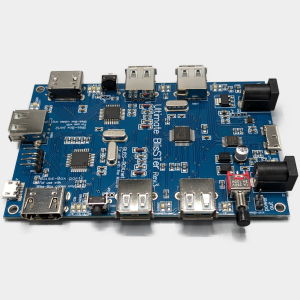
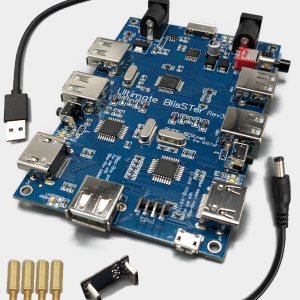
BlisSTer Rev 3 add-on board for MiSTer with a five port USB hub, integrated power switch and two low latency ports for Bliss-Box controller adapters. Related guide: SNAC vs BlisSTer vs USB controllers on MiSTer.
Expansion Boards
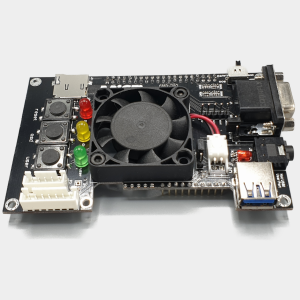
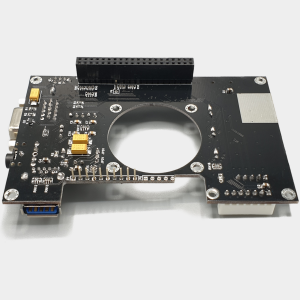
Analog IO board v6.1 for MiSTer with VGA, RGB and YPbPr output via DB15, 3.5mm analog and Mini-TOSLINK digital audio, and a second microSD slot. Related guide: what you need for a first MiSTer FPGA build.
Expansion Boards
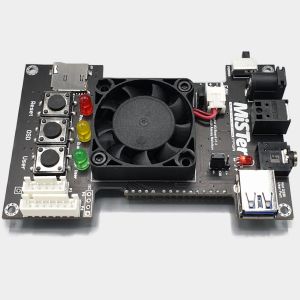
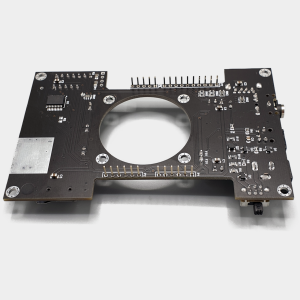
Digital IO board v1.2 for MiSTer FPGA with protected power switch, 3.5mm ADC tape input, Mini-TOSLINK and TOSLINK audio plus a second microSD slot. Related guide: what you need for a first MiSTer FPGA build.
Expansion Boards
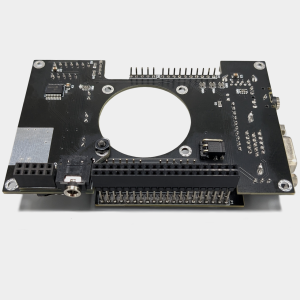
Modular MiSTer IO board that works as Digital IO for dual SDRAM builds or adds an Analog AV module with VGA, RGB, YPbPr and analog audio output. Related guide: what you need for a first MiSTer FPGA build.
Expansion Boards
MiSTer Laggy v1.3 is a display latency tester pairing a dedicated FPGA core with a USB sensor to measure the delay between frame and screen.
Expansion Boards
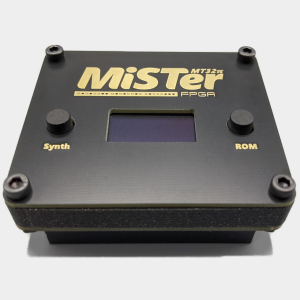
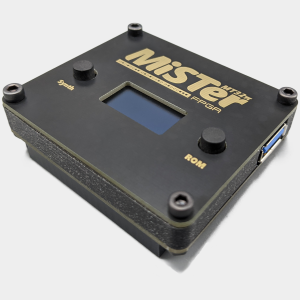
Official MiSTer endorsed mt32-pi HAT that links a Raspberry Pi directly to the MiSTer with no extra power, audio or MIDI cabling for plug and play MIDI.
Expansion Boards
Real time clock board for MiSTer that keeps date and time between power cycles for cores such as ao486, Minimig, C64, Neo Geo, SNES and many more.
Expansion Boards
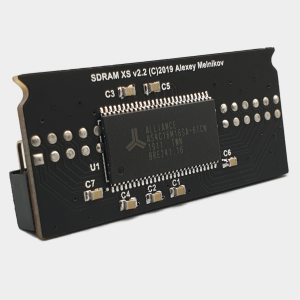
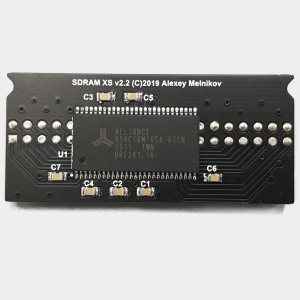
Extra Slim 32MB SDRAM board for MiSTer, providing the precise low latency memory timings demanded by cores such as Neo Geo. For 512KB+ core memory. Related guides: MiSTer SDRAM: 32MB vs 128MB and our MiSTer FPGA beginner's guide.
Expansion Boards
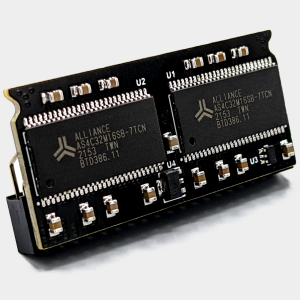
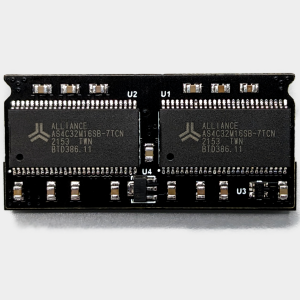
Extra Slim 128MB SDRAM module for MiSTer, essential for Neo Geo and other large cores that need low latency memory the DE10-Nano DDR3 cannot supply. Related guides: MiSTer SDRAM: 32MB vs 128MB and our MiSTer FPGA beginner's guide.
Expansion Boards
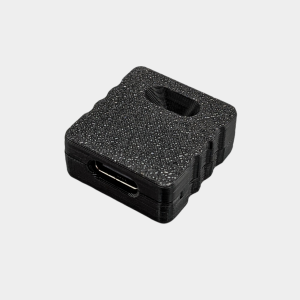
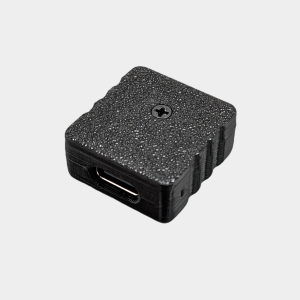
Seven port USB hub v2.1 for MiSTer, connecting neatly to the DE10-Nano through the supplied Micro USB bracket connector so you can add multiple peripherals. Related guides: SNAC vs BlisSTer vs USB controllers and our MiSTer FPGA beginner's guide.